Front Yard Landscape Bed Cleanup with Fresh Mulch and Limestone Border
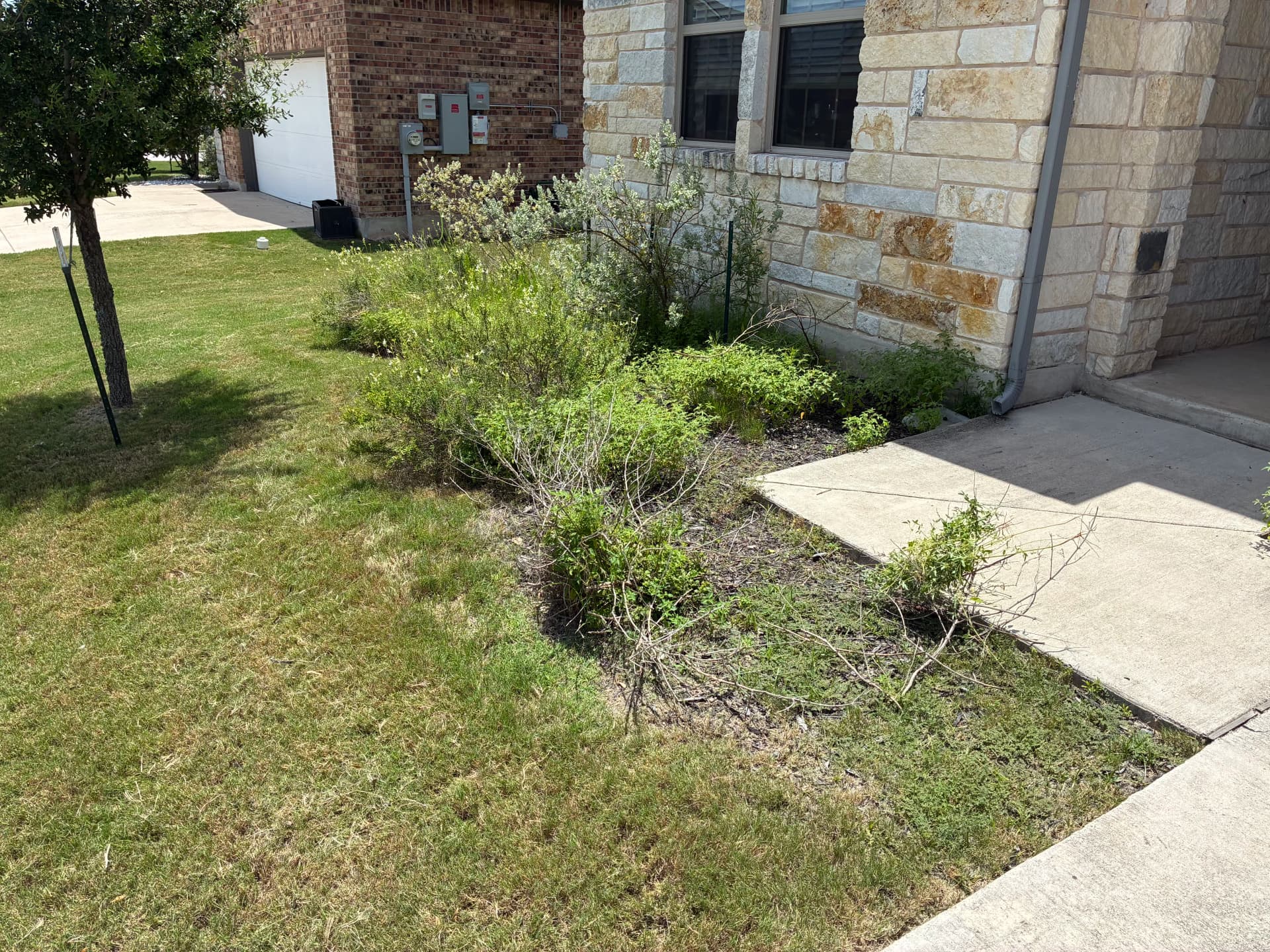
Most front beds don't fall apart overnight. It happens slowly - a plant dies here, some weeds move in there, and before long the whole bed looks rough. That's exactly what we were working with here. Overgrown, tangled shrubs mixed with dead plants and bare soil. Nothing about it was doing the house any favors.
We started by pulling out everything that had run its course. Dead plants, scraggly overgrowth, all of it gone. Getting the bed down to a clean slate is the most important part of this kind of work. You can't build something that looks good on top of a mess.
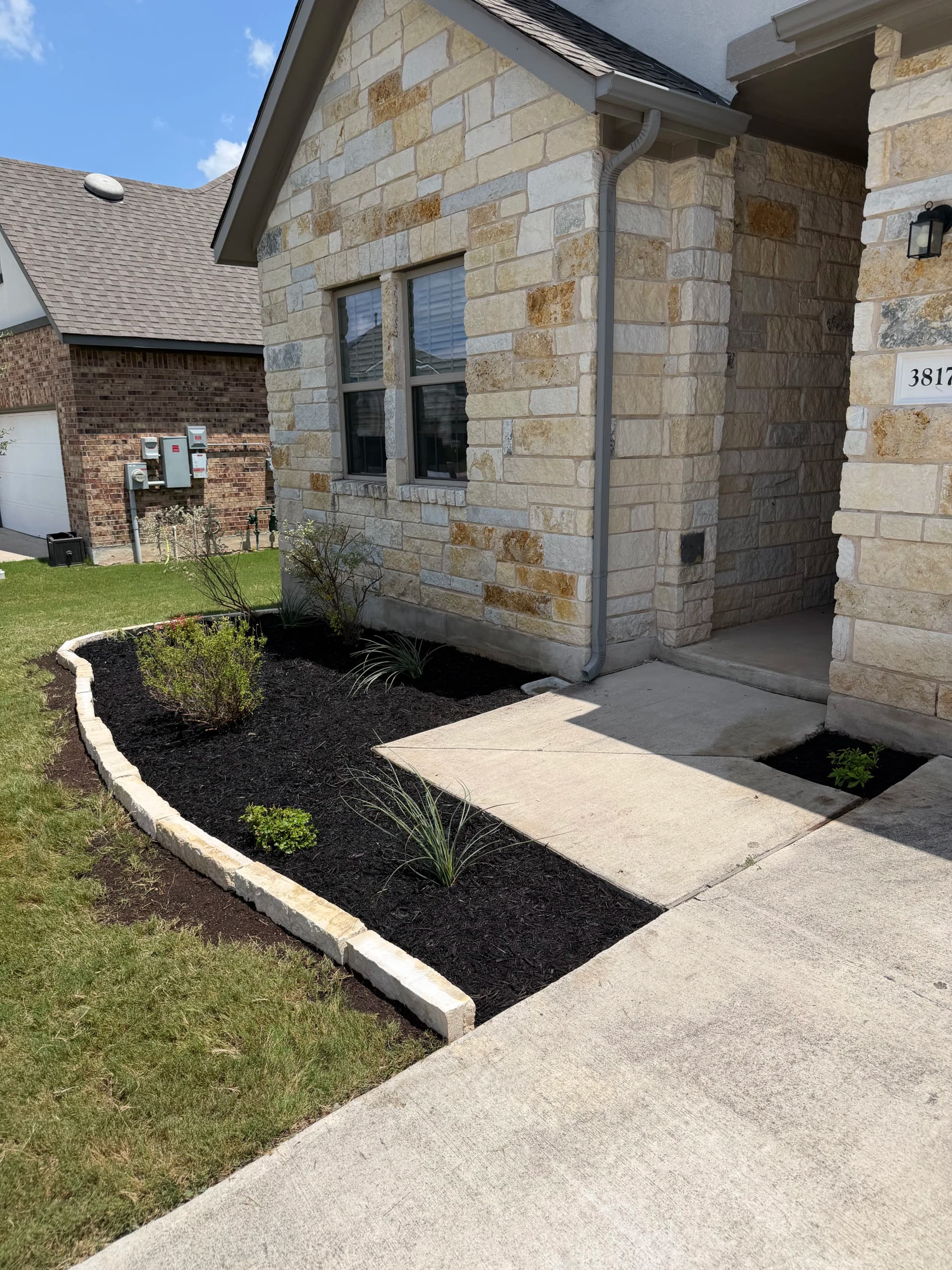
Once the bed was cleared, we brought in fresh plants and spread a thick layer of dark mulch to tie it all together. The mulch does more than just look clean - it holds moisture, keeps weeds down, and gives new plants a better environment to settle in and grow.
The limestone border is what really sharpens the whole thing up. It follows the natural curve of the bed and creates a clear, defined line between the landscaping and the lawn. That kind of edge makes a big visual difference. The house goes from looking neglected to looking cared for - and that's exactly the point.
Landscape beds are one of the first things people notice about a home. When they're overgrown or bare, it drags the whole look down. When they're clean and planted well, it pulls everything together. That's the kind of work we really enjoy doing.